This is one of the most common questions we get. Here's a practical, no-jargon comparison to help you make the right call for your home.
When designing a wardrobe, the material choice shapes everything — durability, cost, look, and maintenance. Two materials come up most often in client discussions: plywood-based wood wardrobes and PVC wardrobes. Here's a clear comparison.
Plywood / MDF Wood Wardrobes
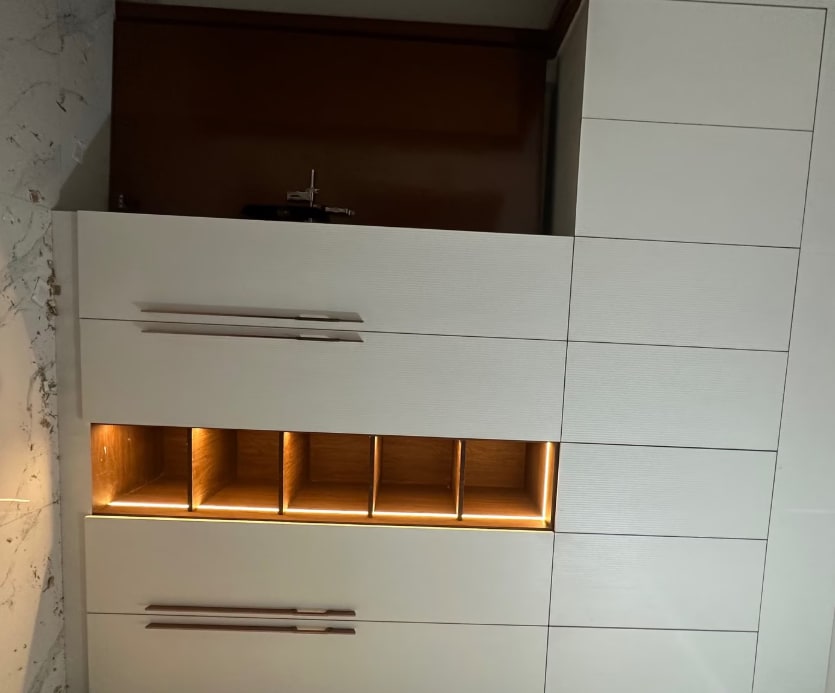
A wood wardrobe typically uses BWR or MR grade plywood for the carcass and MDF (Medium Density Fibreboard) or plywood for the shutters, finished with laminates, lacquer, or veneer.
- Pros: Premium look and feel, accepts any finish (matte, gloss, veneer), better resale value, more structural strength for heavy items, supports soft-close hardware
- Cons: Higher cost (₹1,200–2,000 per sq ft), vulnerable to termites if low-grade material used, can swell in prolonged dampness
PVC Wardrobes
PVC wardrobes use hollow or solid PVC boards for both the carcass and shutters. They're completely waterproof, making them popular in humid climates and for bathrooms.
- Pros: Waterproof, termite-proof, zero maintenance, lower cost (₹700–1,100 per sq ft), lightweight
- Cons: Limited finish options, cannot carry very heavy loads, looks budget-level in premium settings, shutters can warp in extreme heat
Our Recommendation
For bedrooms: Choose plywood-based wood for a premium, lasting wardrobe. For a bathroom cabinet or utility area: PVC is practical and maintenance-free. Never use PVC in a master bedroom if you want the space to feel premium.
We always specify BWR (Boiling Water Resistant) grade plywood from brands like Greenply or CenturyPly — never particle board — for wood wardrobes. This is what determines whether your wardrobe lasts 5 years or 20 years.
Get a free quote for your wardrobe design. We provide a 3D preview and itemised material breakup before any work begins.